
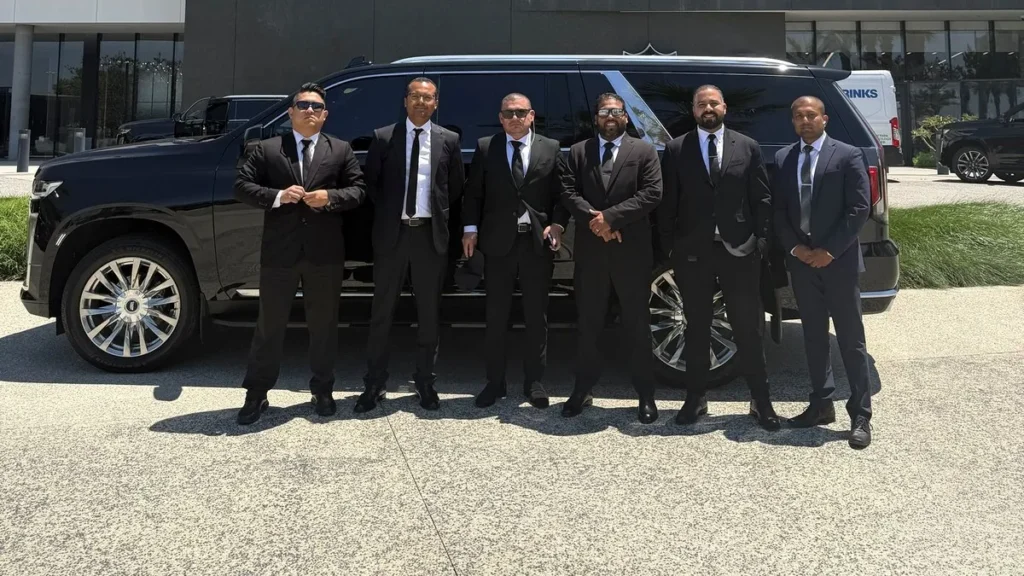
Group travel transportation works when every passenger knows who is picking them up, where, and when, and when someone is accountable if a flight slips. For a delegation, a board offsite or a hotel’s arriving guests in Los Angeles, that usually means pre-arranged private chauffeur service with identified drivers, not a scramble of separate rideshares. This guide covers how to pick vehicles, what to verify about an operator, how to schedule around flights, and how to keep communication simple for everyone involved.
TL;DR
- Decide the vehicle by headcount, luggage and itinerary, then split the group into fewer, well-timed vehicles instead of many ad hoc ones.
- Verify the operator before you confirm: federal operating authority, safety record and insurance matter most for larger vehicles.
- Build time buffers around airport arrivals and returns, and name one contact person on each side.
- Hourly chauffeur service suits multi-stop days; pre-arranged airport transfers suit arrivals and departures.
- Send each passenger a single message with the driver’s name, vehicle, pickup point and a phone number.
Table of Contents
- What counts as group transportation
- Choosing the vehicle: five questions
- Verify the operator before you confirm
- Build the schedule around the weak points
- Communication that keeps a group on track
- What drives the cost
- Book it
- Our perspective
- FAQ
- Sources
What counts as group transportation
A group can be four executives landing on the same flight, twelve guests attending a client dinner, or forty attendees at a conference. The right answer changes with each. Most options fall into a few types:
| Vehicle type | Typical fit | Best for |
|---|---|---|
| Sedan or luxury SUV | 1 to 6 passengers per vehicle | Executives, VIP guests, small teams with luggage |
| Passenger van | Small to mid-size groups | Team transfers between airport and hotel |
| Minibus or shuttle | Mid-size groups | Event shuttles with a fixed loop |
| Motorcoach | Large groups | Conferences, long-distance trips |
Capacity in each category varies by model, so confirm the exact seat count and luggage space with the operator rather than assuming. For the passenger types HePilot serves, such as executives, hotel guests and event attendees, a coordinated set of premium vehicles often gives a better experience than one large vehicle. Each passenger is met personally, luggage is handled, and arrivals don’t have to wait for the slowest member of the group. You can see the vehicle options on our fleet page.
Choosing the vehicle: five questions
Start with the facts of the trip, not the vehicle catalog.
1. How many people, and do they travel together?
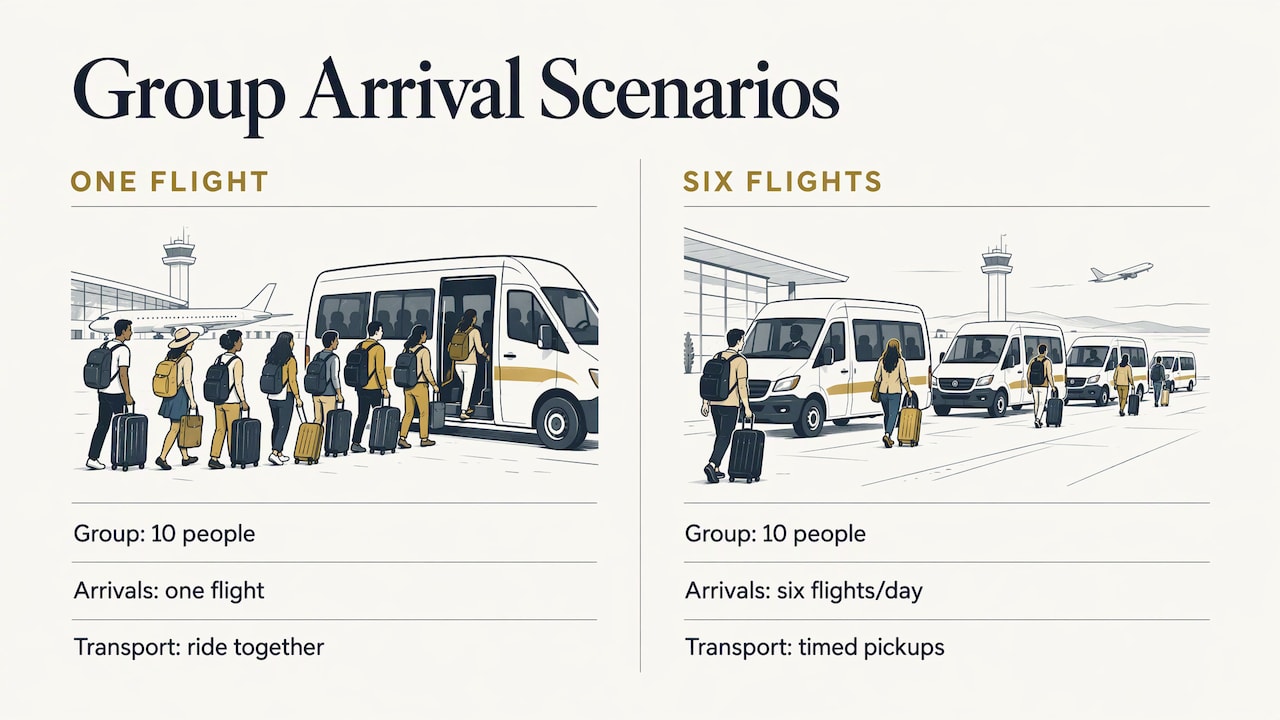
A group of ten who land on one flight and sleep at one hotel is a different job than ten people arriving across a day on six flights. The first can ride together. The second is better served by scheduled pickups at the times people actually land, because making early arrivals wait for late ones wastes hours of the most expensive people on your trip.
2. How much luggage?
Seats are only half of capacity. Count suitcases, garment bags, presentation equipment and anything for the event itself. A vehicle that seats seven may carry far fewer bags once everyone is aboard. If the group is bringing trade-show material, tell the operator in advance.
3. What does the itinerary look like?
One drop-off needs a transfer. A day with a lunch, a site visit and a dinner needs a vehicle and chauffeur on standby, which is exactly what hourly chauffeur service is for. The chauffeur waits, so nobody searches for parking or waits for a new car at each stop.
4. Does anyone need extra support?
Older travelers, passengers with limited mobility and guests unfamiliar with the city benefit from a person who meets them, carries their bags and walks them to the vehicle. We provide assisted transportation for seniors and passengers who need extra support. If part of your group is in this category, read how to arrange airport transportation for seniors and flag it when you book.
5. What is the occasion?
A corporate roadshow calls for punctuality and discretion. A wedding weekend values a smooth arrival and consistent staff. A red-carpet or premiere evening has its own access and timing demands, covered in our guide to red carpet transportation. Tell the operator the occasion, since it affects vehicle choice, staging and the pickup point.
Verify the operator before you confirm
The larger the vehicle, the more the rules matter. The Federal Motor Carrier Safety Administration (FMCSA), the U.S. agency that regulates commercial passenger carriers, publishes tips for chartering a bus. Its main points for organizers:
- Check the company’s safety performance, and prefer a recent safety rating to one several years old.
- A passenger carrier with a final “Unsatisfactory” rating is considered a high safety risk and is prohibited from operating.
- For-hire bus companies need FMCSA operating authority for interstate passenger transportation.
- Buses designed to carry 16 or more passengers must carry $5 million in insurance coverage.
The same page notes that when an organization runs its own vehicle designed for 16 or more passengers, including the driver, the driver needs a commercial driver’s license (CDL) with a passenger endorsement, and the organization needs a drug and alcohol testing program for its CDL drivers. Drivers are also limited in consecutive driving hours. For an assistant, the takeaway is simple: use a professional operator and do not turn an employee’s car or a rented van into the group shuttle.
Seat belts are part of the picture on larger vehicles. Under federal standard FMVSS No. 208, new over-the-road buses and other buses over 26,000 pounds gross vehicle weight must have belts at each passenger seat, with some exclusions, as described in NHTSA’s July 2025 Federal Register notice. That notice also covers temporary exemptions for specific entertainer-type motorcoaches. If your event involves that kind of vehicle, ask the operator how seating is configured.
Whatever the vehicle size, a short checklist before you sign off:
- Ask for the operator’s legal name and confirm its operating authority.
- Ask for proof of insurance appropriate to the vehicle.
- Confirm chauffeurs are professional drivers and will be identifiable at pickup.
- Get the vehicle type and capacity in writing.
- Get the cancellation and change terms in writing.
With HePilot, chauffeur identification is part of the service: drivers are easy to identify at crowded places like LAX, which matters when ten or twenty people are all looking for the right person.
Build the schedule around the weak points
Group transportation fails at the seams: flights land late, someone is stuck at baggage claim, the event runs over, a guest isn’t at the lobby. A good plan places buffers where the delays happen.
Arrivals
Pickups should be keyed to the actual landing time, not the scheduled one. Operators who track flights adjust automatically, but tell them the flight numbers anyway. At LAX, passengers can spend a good while between landing and curb, especially with checked bags, and terminals are crowded. A meet and greet service at LAX puts the chauffeur where the passenger can find them. Our airport transfer guide explains what to book and what information to provide.

Departures
Work backward from the flight. Add the drive time, add a buffer for Los Angeles traffic at that hour, add airport check-in and security time, and add margin for a group that needs to gather and load. A group departing together should leave earlier than a solo traveler would. Departure times for a group are set by the slowest person, so name one person who confirms everyone is down in the lobby.
Between event stops
For receptions, dinners and offsite days, build the timeline with the operator: what time each leg starts, where vehicles stage, and who calls whom. Corporate teams can find a planning framework in our guide to corporate event transportation, and general event logistics in event transportation in Los Angeles.
Backup plans
Ask the operator what happens if a vehicle is delayed or unavailable on the day, and who you call. Keep a short list of contacts: the operator’s dispatch number, the chauffeur’s number for each vehicle, and one decision maker on your side. A backup plan that nobody has written down is not a plan.
Communication that keeps a group on track
Most group transportation problems are communication problems. Executive assistants and concierge teams already know this, but a few habits help.
Send one message per passenger. Include the chauffeur’s name, the vehicle description, the exact meeting point and a phone number. Passengers should not have to read a long itinerary to find where to stand.
Give the operator a manifest. Names, flight numbers, arrival times, luggage counts, and any special needs. It should be one document, updated in one place.
Name a single point of contact. On your side, one person approves changes. On the operator’s side, one dispatcher or coordinator answers. Two people changing the same booking is how guests get left behind.
Confirm the day before. A short confirmation to the operator and to each passenger catches changed flights and wrong names. Executive assistants will find more routines in our executive travel planning guide.
For hotels and concierge teams, the guest experience starts before the vehicle arrives. Provide the guest with the chauffeur’s name in advance and make sure the front desk knows the pickup time. Luggage assistance and a bottle of water on board, both part of our service, are small things guests remember.
The same principle applies beyond Los Angeles. Private driver-guide transport is how many multi-day group itineraries run worldwide, as in these private driver-guide tours in Scotland, where one consistent driver carries the group between airports, hotels and venues.
What drives the cost
Without a quote you can only reason about the factors, and most are within your control:
- Vehicle type and number of vehicles. Larger or more premium vehicles cost more per hour or per trip.
- Time. Hourly service is priced on duration, so a tight schedule is cheaper than a loose one. Waiting time at an airport or venue counts.
- Distance and route. Southern California distances are long, and traffic affects duration.
- Time of day and day of week. Early mornings, late nights and peak event days are harder to staff.
- Extras. Meet and greet, extra stops and special handling add to a quote.
One worked comparison helps. Suppose eight executives arrive on three flights across one afternoon. Three separate pre-arranged transfers, each timed to a landing, give every executive a personal pickup with no waiting. A single shared vehicle would mean the first two arrivals wait for the last, and the hourly cost of that waiting, in people’s time, usually exceeds the saving. Our article on what chauffeur service costs explains what goes into a price. Our pricing is transparent: you know what you are booking before you confirm.
Book it
HePilot provides private chauffeur transportation across Los Angeles and Southern California: pre-arranged airport transfers, hourly chauffeur service, business transportation, special events and assisted transportation. Chauffeurs are professional and easy to identify, luggage assistance is included, and every passenger gets complimentary bottled water. If your group is moving across LA, see our services and book online or by phone.
For a group, tell us the date, the number of passengers, the flights or venues, and any passengers who need assistance. That is enough to start planning the vehicles and timings together.
Our perspective
Most group transportation advice is written for charter buses. Many of the groups we move in Los Angeles are not that. They are executives, clients, hotel guests and families who need to be met, helped with their bags and delivered on time.
We believe the best group experience is made of individual experiences done well. Each passenger should know who is picking them up, recognize the chauffeur in a crowded terminal, and step into a clean, comfortable vehicle without waiting for anyone else.
That is why we focus on punctual pickups, professional chauffeurs who are easy to identify, luggage assistance and premium vehicle options. For arrivals we use pre-arranged airport transfers. For long days we use hourly service, so one chauffeur stays with the schedule. For guests who need extra support, we provide assisted transportation.
Plan the group around the people, not around the vehicle. When the timing and the handoffs are right, the vehicle size tends to follow.
Hepilot
FAQ
How far ahead should I book group transportation?
Book as soon as dates and headcount are firm, especially for event weekends, holidays and large conferences in Los Angeles. Send the final manifest and flight details as soon as you have them. Changes are easier to absorb when the operator has had time to plan.
What should I tell the operator when booking?
Give the date, pickup and drop-off locations, number of passengers, luggage, flight numbers and the schedule of stops. Mention any passengers who need assistance or have mobility needs, and name the person who can approve changes on the day.
Is it better to use one large vehicle or several smaller ones?
It depends on whether the group travels together. If everyone arrives at once and goes to the same place, one vehicle may work. If arrivals are spread out or guests are executives or VIPs, several vehicles timed to each arrival keep people from waiting and give each passenger a personal meeting.
What safety checks matter most when hiring a group transport provider?
Confirm the operator’s federal operating authority and safety record, and ask for proof of insurance. For buses designed to carry 16 or more passengers, FMCSA says the company must carry $5 million in insurance. Ask that chauffeurs be professional drivers and identifiable at pickup.
Sources
- Tips for Chartering a Bus, FMCSA
- Federal Register, Volume 90, Issue 136 (July 18, 2025)
- Private driver-guide tours in Scotland