
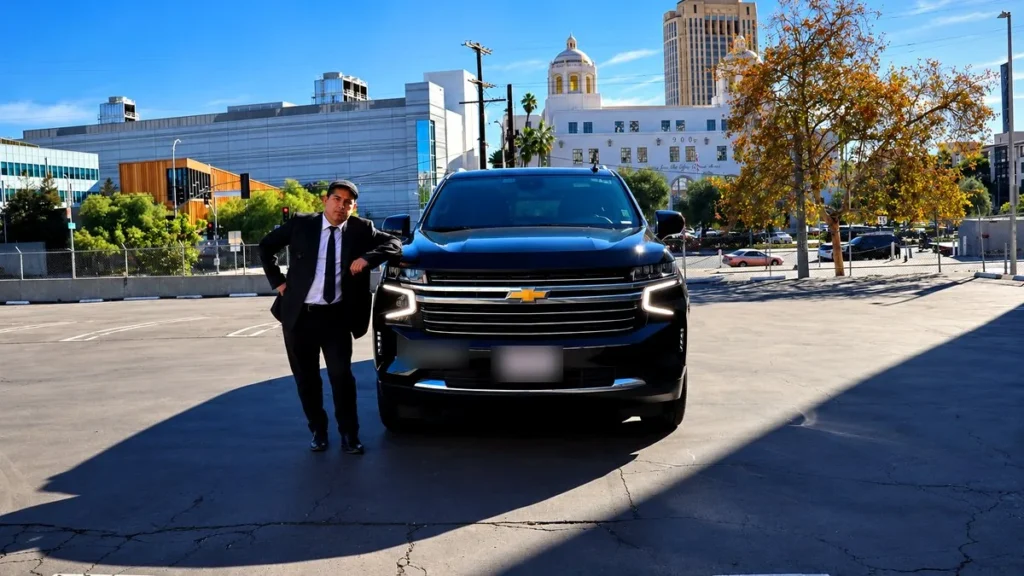
A roadshow car service is private chauffeur transportation built around a full schedule of meetings: one driver and vehicle, or a small group of them, assigned to your team for the day, moving from hotel to meeting to meeting to airport on your timetable. In Los Angeles and Southern California, where a single leg can swing from 20 minutes to over an hour depending on traffic, that is the difference between an executive arriving composed and arriving late. We at Hepilot provide pre-arranged chauffeur service in the region, including hourly chauffeur service and business transportation, and the planning below is what we would hand an executive assistant before a roadshow.
TL;DR
- A roadshow is a run of back-to-back meetings, so book the car by the hour for the whole day rather than as separate point-to-point rides.
- Build the plan from a run sheet: every stop with address, arrival time, meeting length, who rides and where they are met.
- Count vehicles at the busiest moment of the day and decide in advance what happens when a flight, a meeting or a traveler runs late.
- Send the full itinerary, passenger count, luggage and flight numbers up front: that is what an accurate quote depends on.
- For LA roadshows, hourly chauffeur service with a professional chauffeur, luggage help and clear driver identification at LAX keeps the schedule moving.
Table of Contents
- What a roadshow car service actually does
- Why hourly service fits a roadshow
- Build the run sheet first
- Vehicles: count the busiest moment
- Plan for delays before they happen
- What to confirm before roadshow day
- What affects the cost, and what we need to quote
- Roles: who handles what
- Book your Los Angeles roadshow with us
- FAQ
- Sources
What a roadshow car service actually does
The word roadshow covers two situations, and the transportation need is similar in both. An investor roadshow is a series of meetings and presentations pitching an IPO or another securities offering to potential investors. Those meetings were historically held across many cities, and many still include in-person visits. A corporate or sales roadshow works the same way: a leadership team visits clients, partners or analysts in a tight sequence over one to several days.
In both cases the people in the car are paid for their time in the room, not in traffic. The job of the car service is to take every transportation decision off the team’s plate: who picks up whom, where the car waits, how long the drive takes, and what happens when the plan changes.
A roadshow car service differs from ordinary rides in three ways:
- One schedule, not many bookings. The chauffeur knows the whole day, so each leg is planned around the next meeting.
- Time on the clock, not a single trip. The vehicle stays with the group between meetings, so luggage, presentation materials and jackets stay in the car.
- A single point of contact. The assistant talks to one person about changes instead of rebooking a new ride every time a meeting runs over.
Why hourly service fits a roadshow
Separate rides work when you have one pickup and one drop-off. A roadshow has six or seven moves, each with a hard start time, and the gap between them is often shorter than the time it takes to summon and wait for a new car. Hourly chauffeur service solves this: the car is yours for the booked block, and the chauffeur waits at each stop.
There are practical gains beyond punctuality:
- No handoffs. Your executives meet the same chauffeur at breakfast and at the final meeting, so the driver already knows the building entrances and drop-off points.
- Privacy. Calls, prep and quiet time in the back seat. Confidential conversations stay in a vehicle that is only yours.
- Luggage stays put. Bags and materials travel with the group rather than being unloaded and reloaded at each stop.
- Flexibility when meetings run over. The car is already there when the session ends, whether that is on time or 40 minutes late.
For roadshows that begin or end at the airport, pair the hourly block with a pre-arranged airport transfer. Our guide to airport chauffeur service explains how that leg is booked, and our LAX meet and greet service page covers arrivals, where easy driver identification in a crowded terminal matters most.
Build the run sheet first
Everything else, from the quote to the vehicle choice, follows from one document: the run sheet. If you are an executive assistant or office manager, this is the piece of planning that protects you most. Put it in one shared file and send the same version to the chauffeur company, the traveler and any second assistant.
For each leg, record:
| Item | What to write down |
|---|---|
| Pickup | Exact address, entrance or terminal, and the name the chauffeur should look for |
| Departure time | The time the car must leave, not the meeting time |
| Destination | Full address, building entrance, parking or drop-off instructions |
| Meeting start and length | So the chauffeur can plan the wait and the next departure |
| Passengers | Names, count and who rides on which leg |
| Luggage and materials | Number of bags, presentation boards, boxes or equipment |
| Contact | A mobile number for the lead traveler and one for you |
Work backward from each meeting start. If a meeting begins at 10:00 in Century City and the traveler is leaving a downtown hotel, the departure time is not 9:30 because the map says 30 minutes. Add time for the drive in peak traffic, the lobby, security and the elevator, then a buffer. Southern California traffic is the single biggest source of roadshow delays, and a plan that leaves a 15-minute cushion on every leg absorbs most of them.
Two habits make the run sheet work. First, put the day’s most fragile moment at the top: the meeting that cannot move, or the flight that cannot be missed. Second, mark which legs have slack and which have none, so everyone knows where a delay would hurt.
Vehicles: count the busiest moment
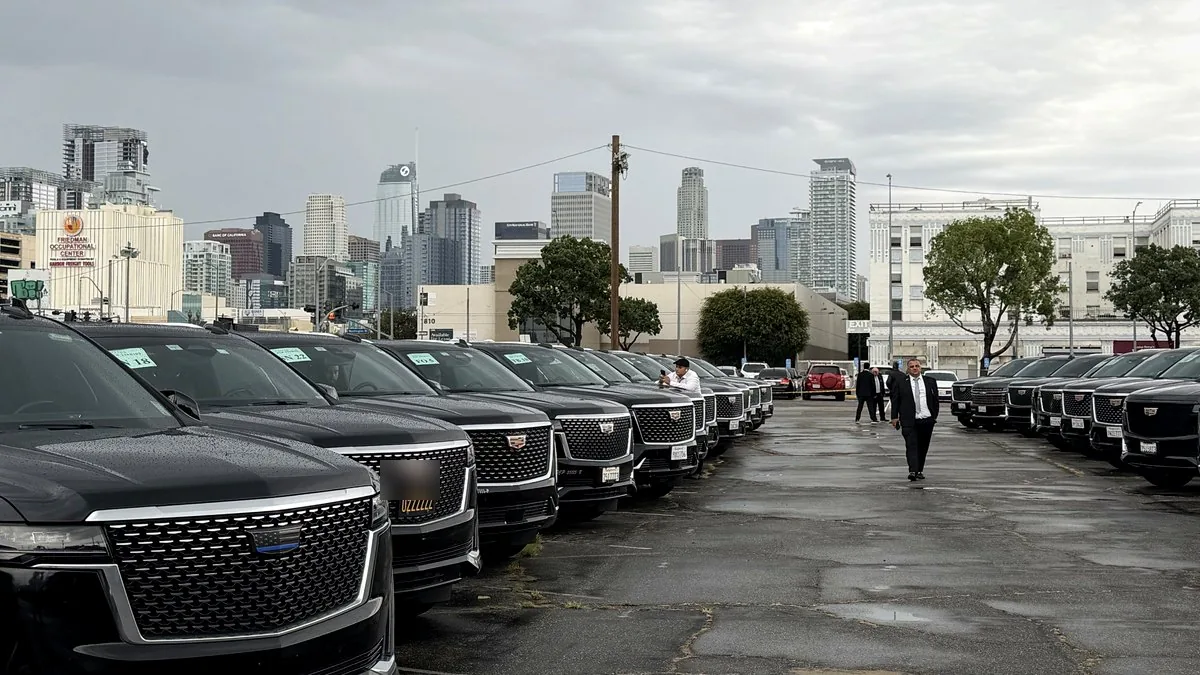
How many cars you need is set by the busiest moment of the roadshow, not by the average. If four executives travel together most of the day but split into two meetings from 1:00 to 3:00, you need two vehicles for those two hours. Look through the run sheet for any overlap, any time the group divides, and any time a second group joins, such as a bank team arriving separately from the issuer’s team.
Then choose the vehicle class by people and luggage rather than by appearance:
- One or two executives with light bags: a premium sedan.
- Three to five travelers or heavy luggage and materials: a premium SUV (up to 7 passengers and 5 bags), or two vehicles for larger teams.
- Mixed groups with different schedules: one vehicle per sub-group, each with its own chauffeur.
You can see the vehicle options on our fleet page. Tell us the passenger count and luggage up front so the right class is assigned from the first quote.
Plan for delays before they happen
Roadshows break in predictable ways: a flight lands late, a session runs long, a traveler is still on a call when the car arrives, or traffic on the 405 turns a 25-minute drive into an hour. The teams that handle this calmly are the ones who agreed the response in advance. Write a short set of rules into the run sheet and name one owner for each:
- Flight delays. The pickup follows the flight, while the meeting point stays the same. Give the chauffeur the flight number so the pickup time moves with the actual arrival.
- A traveler is late to a timed departure. Agree how long the car waits, for example 10 minutes, and who decides after that.
- A meeting runs over. One person, usually the lead executive or the assistant, approves the new departure time. The chauffeur should not have to guess.
- A vehicle problem. Ask what the backup arrangement is, so a replacement vehicle can reach the group without the assistant starting a new search.
- A change to the next stop. Decide how last-minute address changes are sent, by text to a single number, so nothing is lost across five threads.
The point is not to expect failure. It is that when the schedule moves at 1:45 in the afternoon, nobody is deciding the rules at that moment.
What to confirm before roadshow day
Send the run sheet at least several days ahead, and ask for written confirmation of the following. A confirmation message that restates these items is your record if anything is later disputed.
- Itinerary. Every stop, address and departure time matches your run sheet.
- Vehicle and passenger count. The class booked fits the group at its busiest moment and its luggage.
- Chauffeur details. Name, a mobile number and how the traveler will recognize the chauffeur at the first pickup.
- Meeting points. Especially at LAX, where terminals are busy: the exact spot, and whether the chauffeur will meet travelers inside the terminal.
- Flight numbers. For every arrival and departure, so pickups track the real times.
- Waiting and overtime. How time beyond the booked block is handled, and who can approve it.
- Special needs. Seniors or passengers who need extra support should be flagged at booking. We offer assisted transportation and cover this in our guide on airport transportation for seniors.
- Communication. Who texts whom, and which number is reachable during meetings.
If you also coordinate guest arrivals through a hotel concierge desk, share the run sheet with them so the car and the lobby are ready at the same moment.
What affects the cost, and what we need to quote
Roadshow transportation is priced on the schedule, not on a flat per-ride fare. Our offers do not carry a published price, so the quote comes from your itinerary. The factors that move it are the same ones you control through the run sheet:
- Hours booked. The length of the day, including waiting time between meetings.
- Vehicle class and number of vehicles. A premium SUV or a second car for a split schedule changes the total.
- Distance and geography. Many stops across Los Angeles, Orange County and the Inland Empire involve more driving than a day in one district.
- Airport legs. Arrivals and departures at LAX or other regional airports, with meet and greet where wanted.
- Days and timing. Multi-day roadshows, early starts and late finishes.
- Extra support. Luggage assistance beyond the basics, or assisted transportation for a passenger who needs it.
To get an accurate quote, send the dates, the full list of stops with times, the passenger count, the luggage, the flight numbers and any special requirements. The more complete the run sheet, the less the quote has to assume. Our page on chauffeur service cost explains what you pay and why.
Roles: who handles what
Roadshows fail at the seams between people. A simple split of responsibility keeps them intact:
- The executive assistant or office manager owns the run sheet and is the single contact for changes.
- The lead traveler approves any change of plan that affects meeting timing.
- The chauffeur owns the driving, the luggage and the arrival at each door on time.
- The hotel concierge, if involved, owns lobby timing and holding the group’s bags.
For wider guidance on this work, see our executive travel planning guide for assistants and corporate event transportation for events that sit alongside the meetings, such as a dinner or reception.
Our view: the car is part of the meeting schedule
We treat a roadshow as a timetable with a car attached, not the reverse. When the assistant sends us the whole itinerary, our chauffeur can plan each leg around the next meeting, and the day runs the way the run sheet says it should.
What we focus on is what executives notice first: a punctual pickup, a professional chauffeur who is easy to identify at a crowded place like LAX, help with luggage, and complimentary bottled water in the car. Those are small things, but on a day with seven meetings they decide whether the traveler walks into the first room calm or rushed.
Our advice to every assistant is the same: send the full plan early, name one contact for changes, and book the car for the day rather than for each ride. That is how we are designed to work, and it is why hourly chauffeur service suits a roadshow better than a string of separate bookings.
Hepilot
Book your Los Angeles roadshow with us
If your roadshow touches Los Angeles or Southern California, we can arrange hourly chauffeur service for the full schedule, with airport transfers at either end and business transportation between meetings. Premium vehicle options, professional chauffeurs, luggage assistance and clear driver identification are part of how we work.
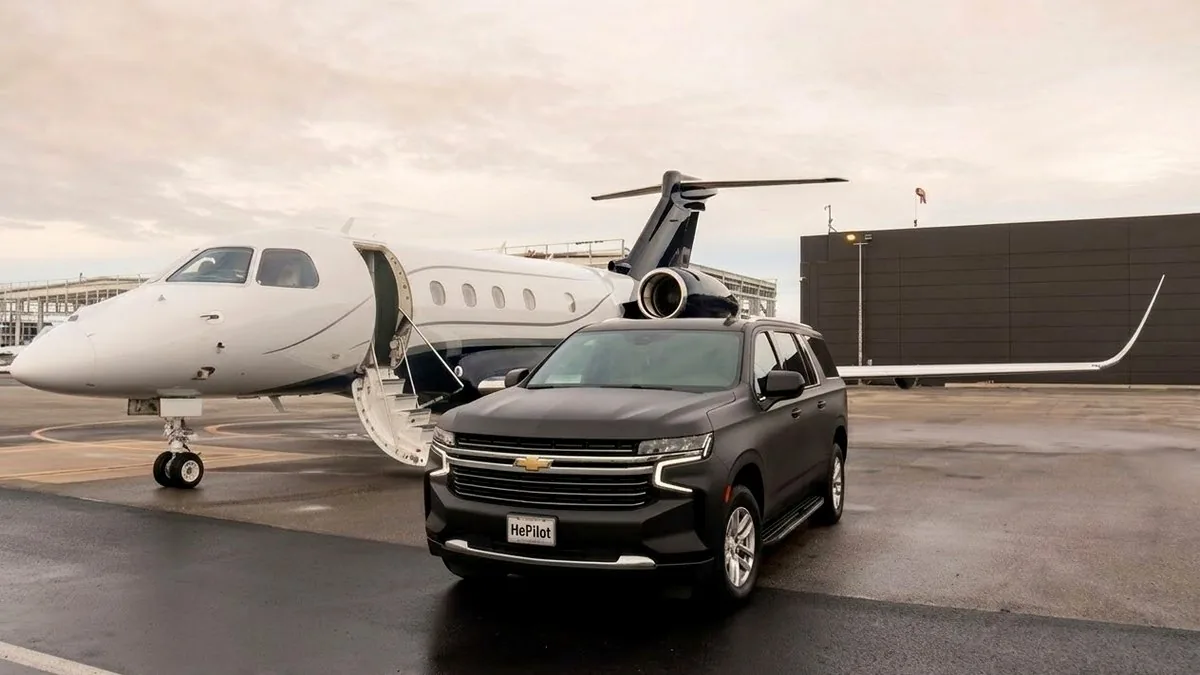
Send us your run sheet through our services page or book hourly service from the Hepilot home page, and we will build the quote from your itinerary.
FAQ
What is a roadshow car service?
It is private chauffeur transportation arranged around a series of back-to-back meetings, usually for an investor, sales or corporate roadshow. The chauffeur and vehicle stay with your team across the day, so each move from hotel to meeting to airport follows your schedule.
How far ahead should I book transportation for a roadshow?
Book as soon as the itinerary is firm, and send the run sheet with the first request. Airport legs, multiple vehicles and multi-day schedules benefit most from early booking, since the plan depends on matching vehicles and chauffeurs to your exact timetable.
Should I book hourly service or separate transfers?
For a day with several meetings, hourly chauffeur service is the practical choice, because the car waits and the chauffeur knows the full plan. A single airport transfer at the start or end can sit alongside it as a pre-arranged ride.
What do you need to give an accurate quote?
Send the dates, every stop with addresses and times, the number of passengers, luggage, flight numbers and any special needs. Vehicle class, hours booked and distance across Southern California are what shape the final price.
Can the chauffeur help with luggage and passengers who need extra support?
Yes. Professional luggage assistance is part of our service, and we offer assisted transportation for seniors and passengers who need extra support. Mention it when you book so it is planned from the first pickup.